 Module Catalog →
Module Catalog →
Module Catalog →
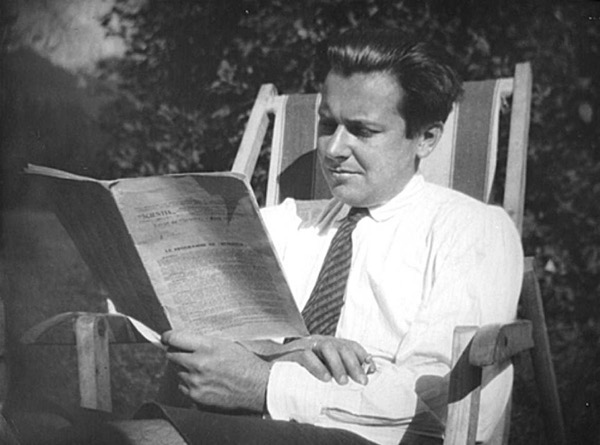
Organizations as open systems exchanging with their environment.
Ludwig von Bertalanffy (1901–1972), an Austrian theoretical biologist who emigrated to Canada and the United States, proposed general system theory in the 1930s–50s: laws of organization that hold across physics, biology, and society. Organizations, in this view, are open systems — importing energy, transforming it, and exchanging with their environments to survive.
General systems theory reframed organizations as open systems — living wholes exchanging energy and information with their environments — rather than closed machines. The conceptual foundation for everything from contingency theory to complexity science.
The era: The Group Era — Leadership can be learned; leader–group relations. Not apart from the group but part of the group — any member can lead.
Organizations as open systems exchanging with their environment.
Where this work feeds the Open Sky frameworks.
Fellow travelers on these threads:
Draw the system before judging the actor.
Trace inputs, outputs, and feedback loops across your organization's boundary.