 Module Catalog →
Module Catalog →
Module Catalog →
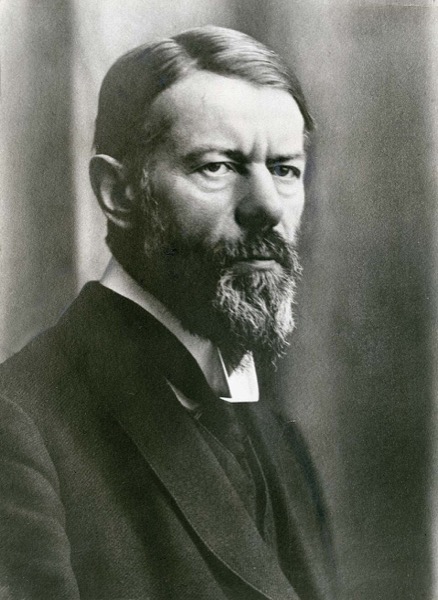
Hierarchies, lines of authority & control.
Max Weber (1864–1920), the German sociologist, lawyer, and political economist, is a founder of modern social science. Writing in Heidelberg and Munich, he analyzed bureaucracy as the signature institution of modernity and distinguished charismatic, traditional, and legal-rational authority — giving leadership studies the very concept of charisma.
Weber described bureaucracy — hierarchies, formal rules, lines of authority — as the most rational form of organization, and distinguished charismatic, traditional, and legal-rational authority. Modern organizational structure descends from this analysis.
The era: Traits & Rank — Multiple forces — traits, nature of the group, and the event; leadership defined by organizational rank.
Hierarchies, lines of authority & control.
This theory sits in the Traits & Rank era of the map: Multiple forces — traits, nature of the group, and the event; leadership defined by organizational rank.
Use hierarchy for reliability and fairness; keep it out of work needing judgment and speed.
Know which authority you're invoking — position, tradition, or charisma — and what each costs.