 Module Catalog →
Module Catalog →
Module Catalog →
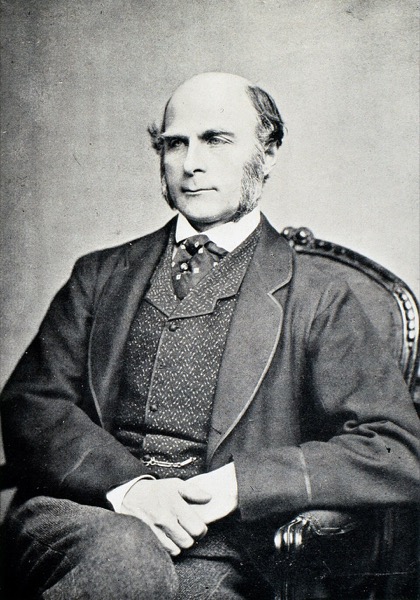
Genius and eminence run in families — leadership is inherited.
Sir Francis Galton (1822–1911), an English polymath and half-cousin of Charles Darwin, founded psychometrics and pioneered the statistical study of human ability. His hereditary claims about eminence — and the eugenics movement he founded — are now rejected, but his methodological ambition seeded a century of measurement in psychology, including the study of leaders. Charles Spearman (1863–1945) extended this tradition with the general-intelligence factor.
Galton's studies of eminent families argued that ability — including the capacity to lead — was hereditary. With Spearman, this early British psychology gave the Great Man view a scientific veneer and set up decades of trait hunting.
The era: The Great Man Era — A single force — internal qualities: personality, physical, and mental. Leaders are born.
Genius and eminence run in families — leadership is inherited.
This theory sits in the The Great Man Era era of the map: A single force — internal qualities: personality, physical, and mental. Leaders are born.
Audit selection processes for inherited-quality assumptions dressed up as 'natural talent.'
Replace innate-ability language with observable, developable behavior.