 Module Catalog →
Module Catalog →
Module Catalog →
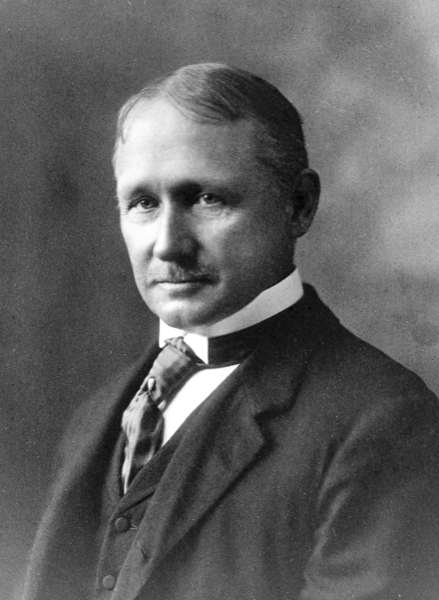
Applying math to management; the follower as automaton.
Frederick Winslow Taylor (1856–1915) abandoned Harvard for the machine shop, rising from laborer to chief engineer at Midvale Steel before consulting at Bethlehem Steel, where his time-and-motion experiments produced 'scientific management.' The first management consultant, he became president of the American Society of Mechanical Engineers and one of the most contested figures in management history.
Taylor focused entirely on what the manager needs to do: measure, standardize, optimize. The follower is treated as an automaton executing the one best way. Ruthlessly effective — and the reductionist worldview at its purest.
The era: Time, Place & Circumstance — Leadership emerges as a result of time, place & circumstance; the number of great leaders is proportional to the number of conflicts engaged.
Applying math to management; the follower as automaton.
This theory sits in the Time, Place & Circumstance era of the map: Leadership emerges as a result of time, place & circumstance; the number of great leaders is proportional to the number of conflicts engaged.
Standardize what is truly repeatable — and only that.
Watch for places where efficiency thinking treats people as interchangeable parts.